Understanding Keyword Ranking Factors: What Actually Moves the Needle in SEO
@keywordrankingfactorspost
After years of watching sites rise and fall in organic search, I have come to see that the obsession with any single ranking signal usually leads to disappointment. Google's algorithm is not a simple checklist. It is a complex system that weighs dozens of signals together, and the real skill is knowing which ones deserve your time and which are noise. That is where a solid understanding of keyword ranking factors becomes essential, not as a theoretical list, but as a practical guide for where to invest your energy.
I remember working with a client who had poured months into building backlinks. Their Domain Authority looked impressive. Their Page Authority was strong. Yet their pages for key terms barely moved. The problem was not the links. It was that their content did not match what searchers actually wanted. They were optimizing for the wrong things, and no amount of off-page SEO could fix that. That experience taught me that ranking factors only matter in context. You have to understand what Google values for a specific query, and that changes depending on search intent, competition, and the nature of the SERP.
Why Context Is Everything in SEO
One of the biggest mistakes I see is treating ranking factors as universal truths. People assume that if a certain tactic worked for one site, it will work for theirs. But Google evaluates every query differently. A transactional query like "buy running shoes" will prioritize different signals than an informational query like "how to tie running shoes." The same goes for local searches, news results, or product listings. The weighting of keyword ranking factors shifts based on what the algorithm thinks the user wants.
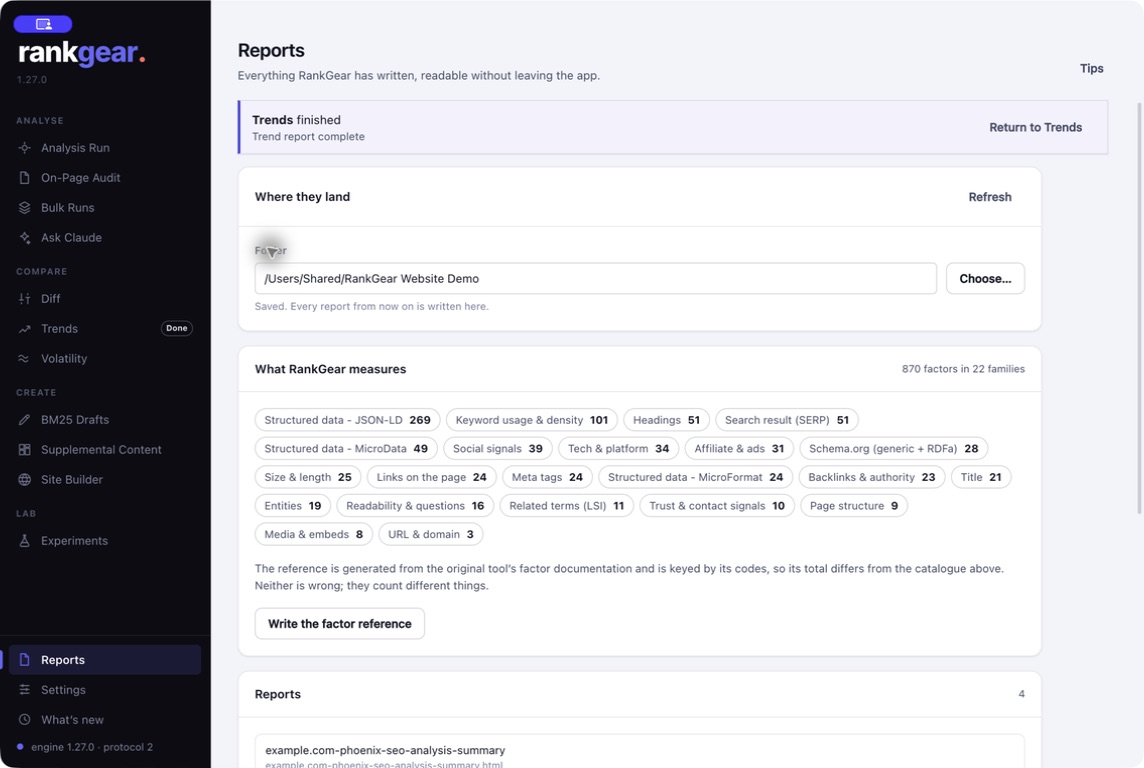
For example, content quality is always important, but what "quality" means can vary. For a medical query, Google looks for EEAT signals: expertise, experience, authoritativeness, and trustworthiness. For a recipe, it might prioritize user experience and page speed. This is where tools that analyze ranking factors for specific queries become valuable. They let you see which signals correlate with top rankings for your exact keyword, rather than relying on generic advice. RankGear, for instance, focuses on this kind of query-level analysis, helping you build an optimization plan based on evidence rather than hunches.
Core Web Vitals and Mobile-First Indexing
In recent years, Google has made it clear that user experience is a major ranking factor. Core Web Vitals measure things like loading speed, interactivity, and visual stability. These metrics are part of the page experience update, and they affect how your site performs in mobile-first indexing. If your site loads slowly on a phone or has elements that jump around while the page loads, you are likely to see lower rankings, especially for queries where users expect a quick answer.
I once consulted for an e-commerce site that had great products and strong backlinks, but their mobile page speed was terrible. They were losing rankings to competitors with inferior products simply because those competitors had faster, smoother mobile experiences. That is a hard lesson, but it shows how technical SEO factors like Core Web Vitals can override other strengths. You cannot ignore the fundamentals of page performance if you want to compete in organic search today.
Content Quality and Search Intent
Content quality is more than just well-written text. It is about whether your page satisfies the user's need. Google uses signals like dwell time, bounce rate, and click-through rate to infer whether people find your content useful. If users land on your page and quickly leave, that suggests your content does not match the search intent. That is why keyword research must go beyond finding high-volume terms. You have to understand what people actually want when they type that query.
For example, if someone searches "how to fix a leaky faucet," they probably want a step-by-step guide, not a product page for plumber services. If you serve the wrong format, no amount of on-page SEO will save you. The algorithm is getting better at distinguishing intent, and it rewards pages that match the query type. This is where traditional metrics like TF-IDF and Latent Semantic Indexing still have relevance, though they have evolved. Modern natural language processing looks at topical relevance and entity relationships, not just keyword density. You need to cover the topic comprehensively, but in a way that feels natural to the reader.
Backlinks and Authority Signals
Backlinks remain a powerful signal, but their role has changed. Google's PageRank algorithm was built on the idea that links represent votes of confidence. That is still true, but the quality of those votes matters more than ever. A single link from a trusted, relevant site can carry more weight than dozens from spammy directories. Domain Authority and Page Authority are metrics that try to capture this, but they are approximations. Google's own system is more nuanced, considering the context of the link, the linking page's topic, and the trustworthiness of the source.
Off-page SEO today is about earning links through genuine value. Guest posts, original research, and useful tools tend to attract natural backlinks. Buying links or participating in link schemes can trigger penalties. I have seen sites lose months of progress because they took shortcuts. The safest approach is to create content that people want to reference, and then promote it thoughtfully. That is harder than buying links, but it lasts longer and aligns with Google's guidelines.
Technical SEO and On-Page Optimization
Technical SEO covers everything from site structure to schema markup. It ensures that Google can crawl and index your pages efficiently. On-page SEO deals with elements like title tags, meta descriptions, headings, and internal linking. Both are necessary, but they are not sufficient on their own. You can have perfect technical SEO and still rank poorly if your content is weak or your backlinks are thin.
One area that often gets overlooked is the relationship between on-page signals and user experience. For instance, using clear headings not only helps search engines understand your page structure, but also helps readers scan the content. That improves engagement metrics, which in turn can boost rankings. The same goes for internal links: they help distribute authority across your site and guide users to related content. Good internal linking is a win for both SEO and usability.
Measuring What Matters
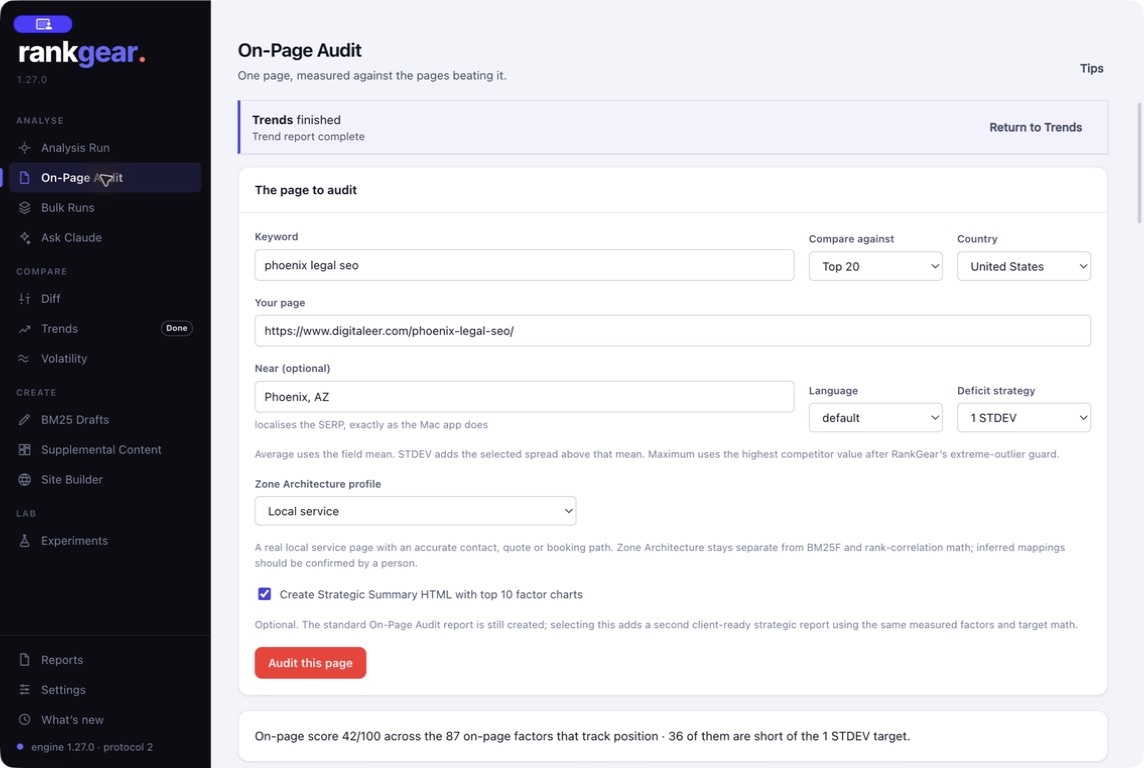
To improve your rankings, you need to measure the right things. Generic advice like "write good content" or "get more links" is not actionable. You need to know which keyword ranking factors are actually influencing your specific queries. That is where a data-driven approach becomes critical. Tools that analyze ranking factors for a given keyword can show you correlations between top-ranking pages and various signals like page speed, backlink count, content length, or use of multimedia.
I recommend starting with a handful of high-priority keywords. For each one, look at the top 10 results and identify patterns. Do they all have high Domain Authority? Do they use a certain content format? Are they optimized for Core Web Vitals? This analysis gives you a roadmap. You do not need to do everything. You need to do the things that matter for your specific situation. That is the difference between efficient SEO and wasted effort.
Putting It All Together
SEO is not about chasing the latest trend. It is about understanding the fundamentals and applying them with judgment. The keyword ranking factors that matter most are the ones that directly affect whether your page meets the user's needs. Google's algorithm is constantly evolving, but the core principles remain: create useful content, make your site fast and easy to use, earn trust through quality backlinks, and align your pages with search intent. If you do those things consistently, you will see results over time. The key is to be patient, measure your progress, and adjust based on evidence, not guesses.
In the end, the best approach is to treat ranking factors as a system, not a list. Each factor interacts with others. A strong backlink profile cannot compensate for a terrible user experience. Great content will not rank if your site is slow and unindexable. By taking a holistic view and using tools that provide query-specific insights, you can build a strategy that works for your unique situation. That is the real art of SEO: knowing which levers to pull and when.